

Breastfeeding and Torticollis: Positioning, Support, and What to Watch For
Torticollis is a tight or shortened neck muscle — most often the sternocleidomastoid — that causes a baby to tilt or turn their head to one side. While it’s fairly common, it can make feeding a bit tricky. Babies with torticollis may prefer turning their head one way, struggle to latch on the non-preferred side, or feel uncomfortable in certain feeding positions.
The good news? With the right support and positioning, feeding can become much smoother and more comfortable for both baby and parent.

What Do I Do With My Hands?
Every baby — and every feeding journey — is unique. The way you position your hands while supporting your breast can make a big difference in how your baby latches, how comfortable you feel, and how efficiently your baby feeds.
In this post, we’ll explore several helpful breastfeeding hand positions — including the C-hold, U-hold, Sandwich hold, Dancer’s hold, and two modified Dancer’s holds — to help you find what works best for you and your baby.

Breastfeeding a Baby with Hypotonia: Tips, Support, and Hope
Breastfeeding a baby with hypotonia (low muscle tone) can look and feel very different from a typical feeding journey. Babies with hypotonia may have weaker muscle control in their mouth, jaw, or body, which can make it harder to latch, stay latched, and transfer milk effectively. While these challenges can feel overwhelming at times, with the right support, positioning, and guidance, many babies with low tone can successfully breastfeed—fully or partially.
Breastmilk & Formula Storage: The Rule of 5s
As a parent, figuring out how to safely store breastmilk or formula can feel overwhelming. You want to make sure your baby’s milk is both nutritious and safe. That’s why I love using “the rule of 5s” – a simple way to remember storage times for breastmilk – plus a few key tips for formula.

The Ultimate Guide to Breast Pumps: Finding the Right Fit for You
Choosing the right breast pump can feel overwhelming—especially with so many options available. Whether you’re exclusively pumping, going back to work, or just planning to collect a little extra milk for date night, knowing the types of pumps and when to use them can make a huge difference.
Here’s a breakdown of the most common breast pump types (plus milk collection devices!) and how to decide what’s right for you.
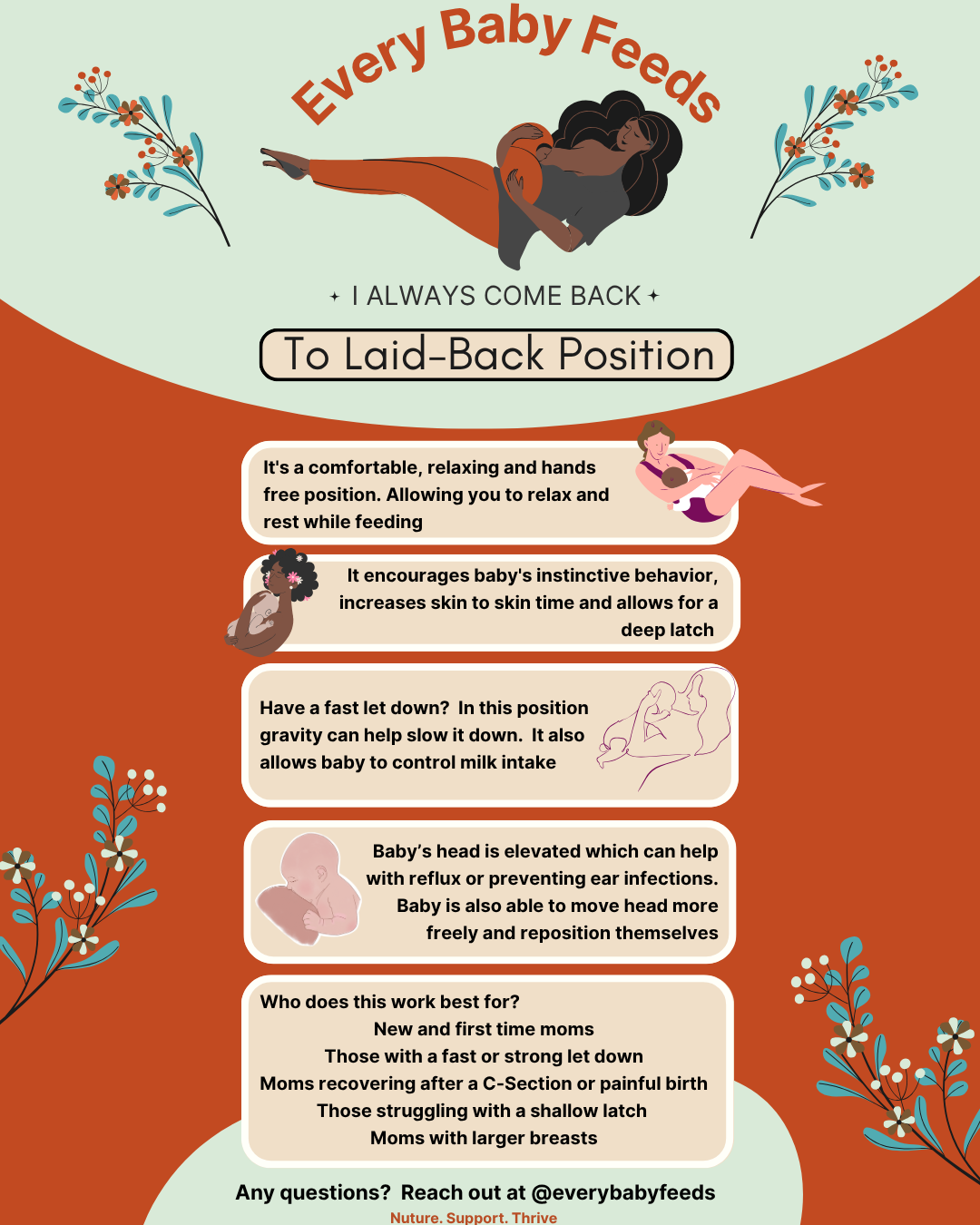
Why I Love the Laid-Back Breastfeeding Position (and Why You Might Too!)
Discover the benefits of the laid-back breastfeeding position for moms and babies. Learn how to do it, which families benefit most, and how it can support latch, comfort, and even ear health.
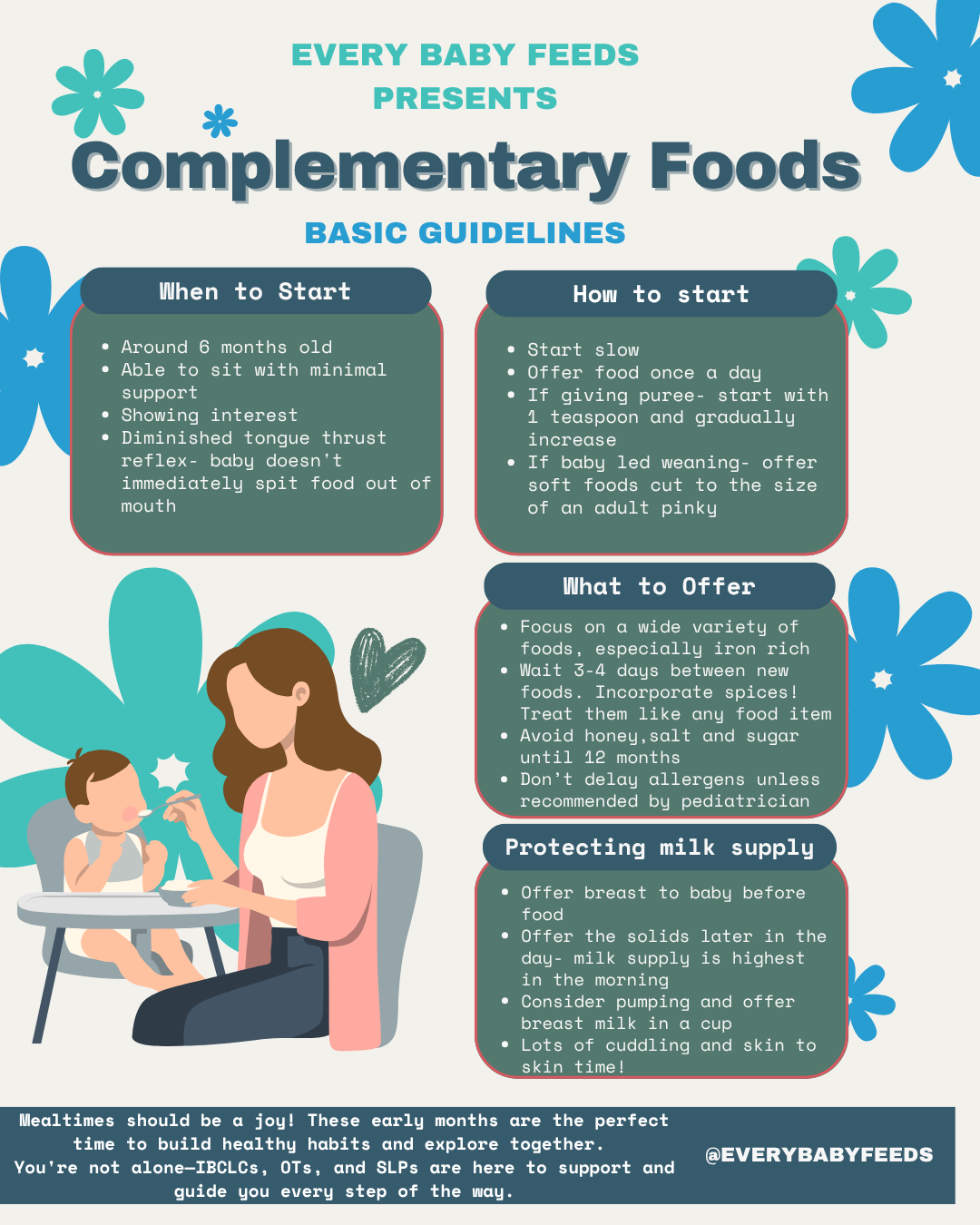
How to Introduce Solids: Baby-Led Weaning, Purees, and Protecting Breastmilk Supply
Learn when to start solids, first foods to offer, baby-led vs spoon-feeding, and how to protect your breastmilk supply during complementary feeding.

4 Breastfeeding Positions Every Parent Should Know
Finding the right breastfeeding position can make all the difference for both you and your baby. The right hold can improve latch, reduce discomfort, and make feeding sessions more relaxed. In this post, I’ll walk you through four of the most common breastfeeding positions — football hold, cradle hold, cross-cradle hold, and side-lying — along with tips for making each one work for you.

Common Breastfeeding Complications
Breastfeeding is natural, but it’s not always easy — and you are not alone if you’re struggling. Many families experience challenges during the first few weeks, and with the right support, most issues can be resolved. Below are six of the most common breastfeeding concerns I see as a Lactation Consultant in San Marcos and across North County San Diego, along with practical tips to help you feel more confident.