
Cluster Feeding vs. Low Milk Supply: How Can You Tell the Difference?
“My baby wants to breastfeed again. I just fed them! Does this mean I’m not making enough milk?”
This is one of the most common worries I hear from breastfeeding parents, especially during the newborn stage.
The short answer? Frequent feeding does not automatically mean you have a low milk supply.
Newborn feeding patterns aren't always predictable. Your baby may have periods when they breastfeed frequently, sometimes wanting to return to the breast shortly after finishing a feed. This is often called cluster feeding, and it can be a completely normal part of newborn feeding.
But frequent feeding can also happen when a baby isn't transferring enough milk. So how can you tell the difference between normal cluster feeding and a possible milk supply or feeding concern?
Instead of watching the clock, we need to look at the whole picture.
Baby Is Sick: Should I Call the Pediatrician, Go to Urgent Care, or Go to the ER?
When your baby is sick, sometimes the hardest part isn't recognizing that something is wrong—it's figuring out what to do next.
Should you call the pediatrician? Go to urgent care? Head to the emergency room? Call 911?
Especially with a newborn, it can be difficult to know when a symptom is something that can wait for a call to the pediatrician and when your baby needs more immediate medical attention.
The first thing I tell parents is simple: trust your gut.
You know your baby. If their breathing, feeding, behavior, color, alertness, or something else just seems different, it's appropriate to ask for help. You don't need to know what's wrong before calling your baby's healthcare provider.
This guide can help you understand the different levels of care and where you might start when your baby is sick.

Does Insurance Cover a Lactation Consultant? A Guide to Using Your Benefits
One of the most common questions families have when looking for breastfeeding or feeding support is: Does insurance cover a lactation consultant?
The good news is that many health insurance plans include lactation support as a covered benefit. The less simple answer is that figuring out how to use those benefits can sometimes be confusing.
Depending on your insurance plan, you may be able to see an IBCLC who is directly in-network with your insurance, access care through a third-party lactation network, or use out-of-network benefits.
If that already sounds like a lot of insurance language, don't worry! Let's break down what it actually means.
When Does Breast Milk Come In? What to Expect in the First Week Postpartum
If you just had a baby and are wondering, “When does breast milk come in?” you are definitely not alone. This is one of the most common questions new parents have during the first few days after birth.
For most people, breast milk begins noticeably increasing somewhere around 2–5 days postpartum. But your baby isn't waiting several days for you to start making milk. Your body is already producing colostrum, the nutrient-rich first milk designed specifically for those early newborn days.
Milk production changes quickly during the first week postpartum. Knowing what to expect—and when to ask for help—can make those first few days of breastfeeding feel much less overwhelming.
The Potty Training Puzzle Guide
As the parent of a child with Down syndrome, I spent far too much time comparing our journey to everyone else's. Every parenting article seemed to focus on age or promise a three-day solution. Friends would ask if he was potty trained yet, and I never knew how to answer. The truth was... it wasn't that simple.
Looking back, I wish someone had explained one important concept to me:
Potty training isn't one skill. It's a puzzle.

How to Prepare for Your Child's Specialist Appointment: 5 Tips for Parents
You waited weeks—maybe even months—for your child's specialist appointment.
Then suddenly, you're sitting in the exam room trying to explain months of concerns, remember every question you wanted to ask, and process a lot of new information at once.
The appointment moves quickly. The specialist asks questions you weren't expecting. You remember an important detail halfway through—or maybe on the drive home. You leave and realize you forgot to ask something important, aren't entirely sure what happens next, or feel like you didn't explain your concerns as clearly as you wanted to.
We've all been there.
Preparing ahead of time can help you make the most of your child's specialist appointment, communicate your concerns more clearly, and leave with a better understanding of the plan.

When Should You See a Lactation Consultant? 5 Signs It's Time to Ask for Help
Exhausted.
Your baby has been nursing for what feels like forever, but still seems hungry. Your nipples hurt every time they latch. You're exhausted, wondering if this is just what breastfeeding is supposed to feel like.
So, like so many parents before you, you grab your phone and start searching:
"Should breastfeeding hurt?"
"How do I know if my baby is getting enough milk?"
"When should I see a lactation consultant?"
If you're here because you've typed one of those questions into your phone during a late-night feeding, you're not alone.
One of the biggest misconceptions about lactation support is that you should only reach out when things have become really difficult. In reality, many breastfeeding challenges are easier to address when they're identified early—and sometimes what parents need most is reassurance that things are actually going well.
As an RN and International Board Certified Lactation Consultant (IBCLC), I work with families navigating everything from painful latch and pumping concerns to feeding medically complex infants. My goal isn't just to solve problems—it's to help families feel confident, supported, and empowered throughout their feeding journey.
If you've found yourself wondering whether it's time to seek breastfeeding support, here are five signs that a lactation consultation may be helpful.
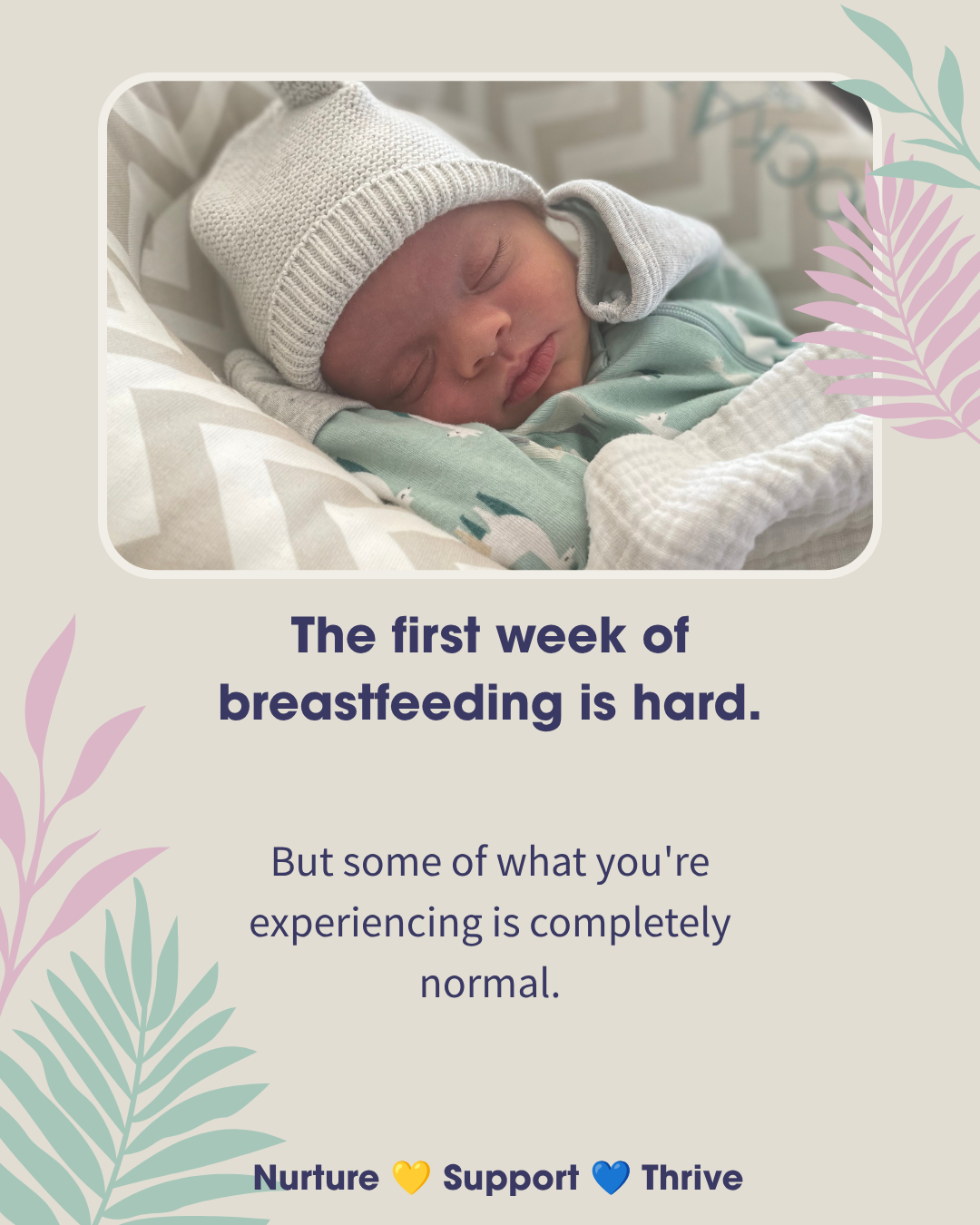
5 Things That Are Normal in the First Week of Breastfeeding (And a Few Signs Worth Watching For)
The first week of breastfeeding is hard.
Not because you're doing it wrong. Not because your body isn't capable. But because you're learning something completely new, on no sleep, while recovering from one of the most physically demanding experiences of your life.
And in the middle of all of that, it can feel almost impossible to know what's normal and what isn't.
So let's talk about it.
Here are five things I see constantly in the first week that worry new moms — and that are actually completely expected. Plus a few signs worth paying attention to, because knowing the difference is everything.

How to Find the Right Lactation Consultant for Your Family
So you've decided you need a lactation consultant.
Maybe breastfeeding isn't going the way you expected. Maybe your baby has a diagnosis and you're not sure how that affects feeding. Maybe you have a diagnosis and you are concerned you won't be able to breastfeed. Maybe you're leaving the hospital with more questions than answers and no clear plan.
Whatever brought you here — you made the right call.
But here's something most people don't realize: lactation consultants are not all the same. Not in background, not in focus, and not in who they serve best.
Finding the right LC isn't just about finding someone with the right credentials. It's about finding the right fit for your specific situation. This post will help you do exactly that.

What to Do When Your Medical Team Dismisses Your Concerns
You came to that appointment prepared.
You wrote down your concerns. You tracked the symptoms. You noticed something — a pattern, a behavior, a change — and you brought it in, hoping someone would take it seriously.
Instead, you left with a "let's just watch it" and a follow-up scheduled for three months from now.
And now you're sitting in the parking lot wondering if you imagined the whole thing.
You didn't.
Feeling dismissed by a medical provider is one of the most disorienting experiences a parent can have — especially when you're already navigating a diagnosis, a specialist team, or a child whose needs don't fit neatly into a standard well-child visit. You came in as the expert on your child. You left feeling like you weren't heard.

Signs Your Baby Isn't Transferring Enough Milk — And What to Do About It
You're nursing around the clock. Your baby seems to be latching. And yet something feels off.
Maybe your baby is never quite settled after a feed. Maybe they're losing weight, or you're just not sure they're actually getting anything.
Here's the truth: breastfeeding doesn't come with a measuring line. You can't see what's happening inside. And that uncertainty — especially in those early days when everything already feels overwhelming — can be genuinely terrifying.
But your baby's body will give you clues.
This post walks through the most common signs that milk transfer may be off, why they happen, and what to do when you notice them.

You Don't Have to Wait for a Crisis to Ask for Help Navigating Your Child's Care
Nobody hands you a roadmap when you leave the hospital.
For some families, the complexity starts from day one. You came home with a baby who needs extra support — maybe there's a diagnosis, a specialist referral, a follow-up you're not sure how to prepare for. The appointments are already stacking up and nobody has explained what order any of it is supposed to happen in. You're Googling things at midnight, nodding along in appointments, and sorting out the details later.
For others, things were going fine — until they weren't. Your child gets sick. Not with anything complicated or chronic, just sick. But you can't seem to get your concerns addressed, and you find yourself in the ER for the third time because you don't know where else to turn or how to make the system work for you in that moment. Your child is otherwise healthy. You're not overreacting. There's just a gap between what you need and what you know how to ask for.
That gap is exactly what healthcare navigation support is designed for.

Paced Bottle Feeding: Why It Helps Protect Breastfeeding and Support Your Baby
Many breastfeeding parents have the same worry:
“If I give my baby a bottle, will they start refusing the breast?”
You may have heard the term nipple confusion—and while that phrase can be a little oversimplified, the concern behind it is very real.
When bottles are introduced without much guidance, some babies begin to prefer the faster, easier flow of the bottle over the work of breastfeeding. Parents may notice fussing at the breast, shorter nursing sessions, shallow latch behavior, or sudden breast refusal after bottles are introduced.
This can feel incredibly frustrating—especially when the goal was simply to have flexibility, prepare for returning to work, involve a partner in feeding, or build a small freezer stash.
The good news is that bottles do not have to disrupt breastfeeding.
In many cases, the issue is not the bottle itself—it is how the bottle is offered.
This is where paced bottle feeding can make a huge difference.

Jaundice in Newborns: What It Is, When to Watch, and When to Act
Your baby’s skin has taken on a yellow tint. Maybe the whites of their eyes look a little off. Your heart is in your throat.
Take a breath.
Jaundice is one of the most common conditions in the newborn period. It affects up to 60% of full-term babies — and the vast majority of cases resolve with close monitoring and, often, more feeding.
That doesn’t mean you ignore it. It means you understand it.
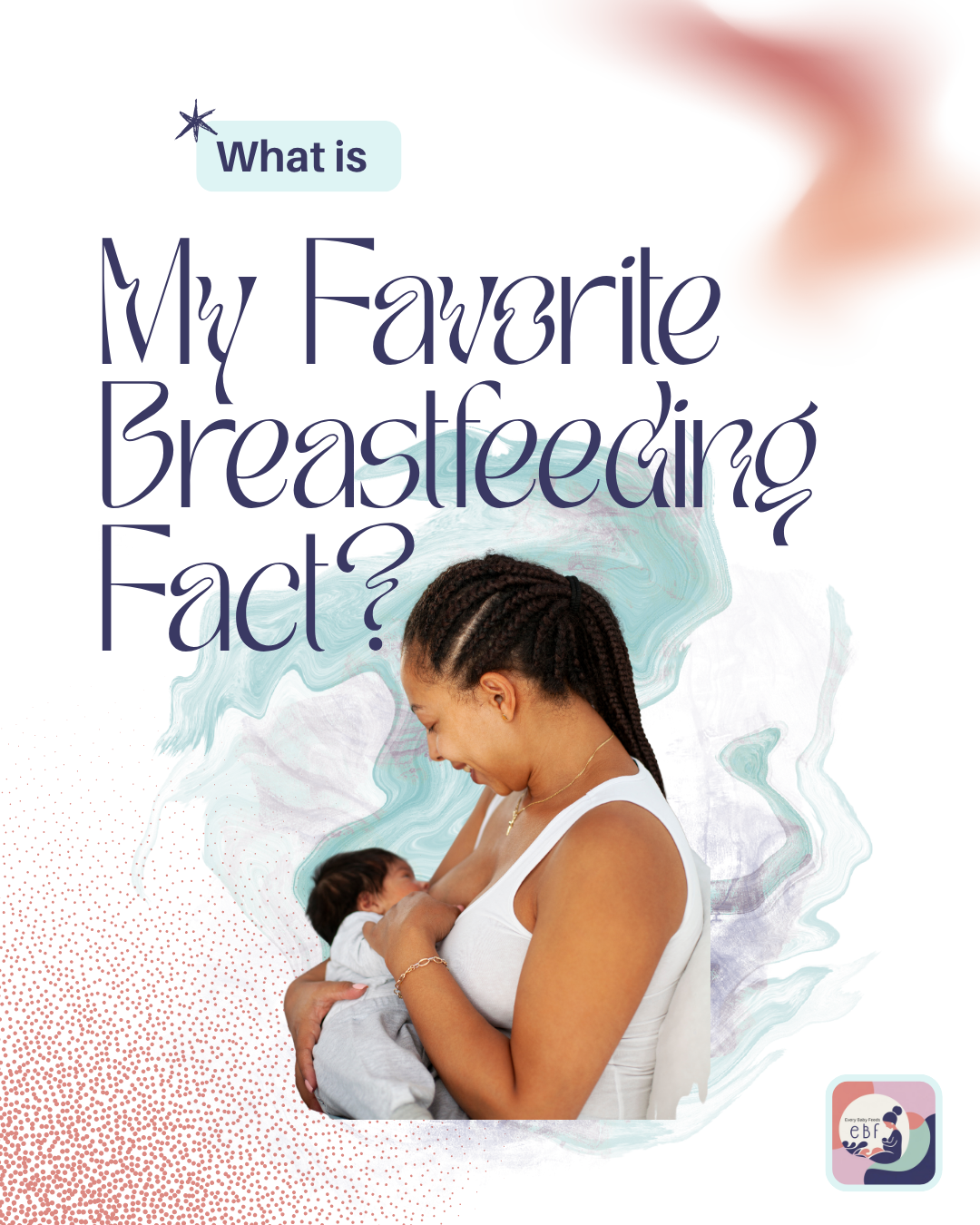
The Biology of Breast Milk: A Living, Responsive System
Here is something that stops me every time I think about it:
When your baby nurses, their saliva enters the breast through the nipple. Your body reads it — the pathogens, the immune signals, the biochemical clues — and begins adjusting your milk composition in response. Within hours, your milk shifts to better protect your baby from whatever they’ve been exposed to.
That’s not magic. That’s biology. And it’s one of the most extraordinary examples of a biological feedback loop that exists in nature.

What Is Healthcare Navigation — and Does Your Family Need It?
You thought the hard part was getting through labor and delivery.
Then you came home with your baby, and the appointments started. The referrals. The specialists with long wait lists. The follow-up you're not sure how to prepare for. The insurance calls that go nowhere. The pediatrician visit where the doctor said something important and you nodded along — and then spent the next three hours Googling what it actually meant.
Nobody hands you a roadmap for this part of parenting. And for families navigating complex medical needs, early diagnoses, or simply the overwhelming volume of information that comes with a new baby, the system can feel impossible to keep up with.
That's what healthcare navigation is for.
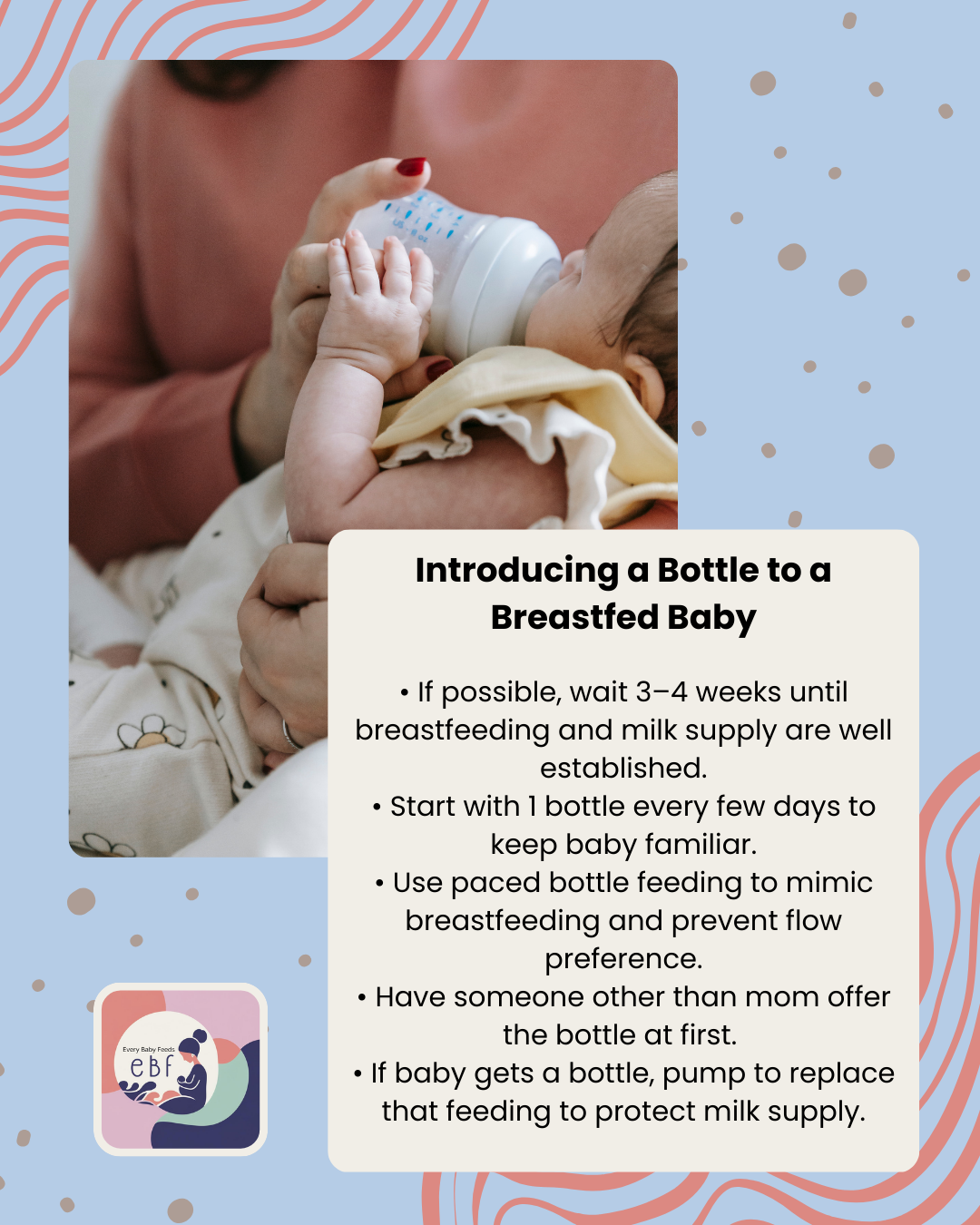
Introducing a Bottle to a Breastfed Baby: How to Do It Without Disrupting Breastfeeding
The biggest mistake I see parents make when introducing a bottle? Waiting until the week before they go back to work.
Picture this: maternity leave is ending in a few days. Pump parts are spread across the counter, daycare forms are half-filled out, and there’s a growing sense of panic because your baby — who has been happily breastfeeding for weeks — suddenly refuses a bottle.
You try a different position. A different bottle. Maybe a different room. Someone suggests warming the milk more. Someone else says try when the baby is really hungry. Meanwhile, the clock is ticking toward your first day back at work.
If this scenario feels familiar, you’re not alone. Bottle refusal is one of the most common concerns I hear from breastfeeding families preparing for childcare or a return to work. And it often happens not because a baby can’t take a bottle — but because the timing and approach made the process more stressful than it needed to be.

Fever in Babies: When to Call the Pediatrician vs Go to the ER
Few things spike a parent’s anxiety faster than seeing a high number on the thermometer.
But here’s the truth:
A fever itself is not the enemy.
Fever is part of the body’s immune response. It helps fight infection. In many cases, it’s doing exactly what it was designed to do.
We shouldn’t focus on treating the fever and looking only at the number.
We should treat the baby, considering their age and overall condition.
Let’s walk through what actually matters.

Breastfeeding During Ramadan: Caring for Yourself is an Act of Worship
You’ve been looking forward to Ramadan — the prayers, the reflection, the sense of community. But this year, you’re also breastfeeding. Your body is still recovering from childbirth, and the nights are full of feeds. You want to participate in the fast, to join in the spiritual practice, but you’re unsure if you should.
For many mothers, this mix of excitement and uncertainty can quickly turn into guilt or worry. Watching others fast while you navigate sleepless nights and frequent feeds can make you feel left out — or even like you’re falling short.
The good news is that our faith anticipated this season of life. Mercy and flexibility were built into the practice — not as an exception, but as care for you and your baby.

What is Every Baby Feeds?
In the early weeks, parents are constantly asked to make decisions without context — and exhaustion makes uncertainty feel heavier.
When most families search for feeding support, they expect a single answer to a single problem: fix the latch, increase supply, stop the pain, help the baby gain weight. And sometimes it really is that straightforward.
But often, it isn’t.
Many parents come in thinking they need help with breastfeeding and discover what they actually needed was clarity — understanding what their baby’s behavior means, how recommendations fit together, and how to make decisions without constantly second‑guessing themselves.
Every Baby Feeds was created to bring three pieces of early parenthood together in one place: hands‑on feeding support, guidance through the healthcare system, and education that builds confidence beyond one appointment.